
Design perspectives
A Dialogue Between Old and New Materials in Historic Home Renovations
Old home renovations preserve original textures while modern furniture integrates independently, allowing new and old elements to engage in an equal dialogue.
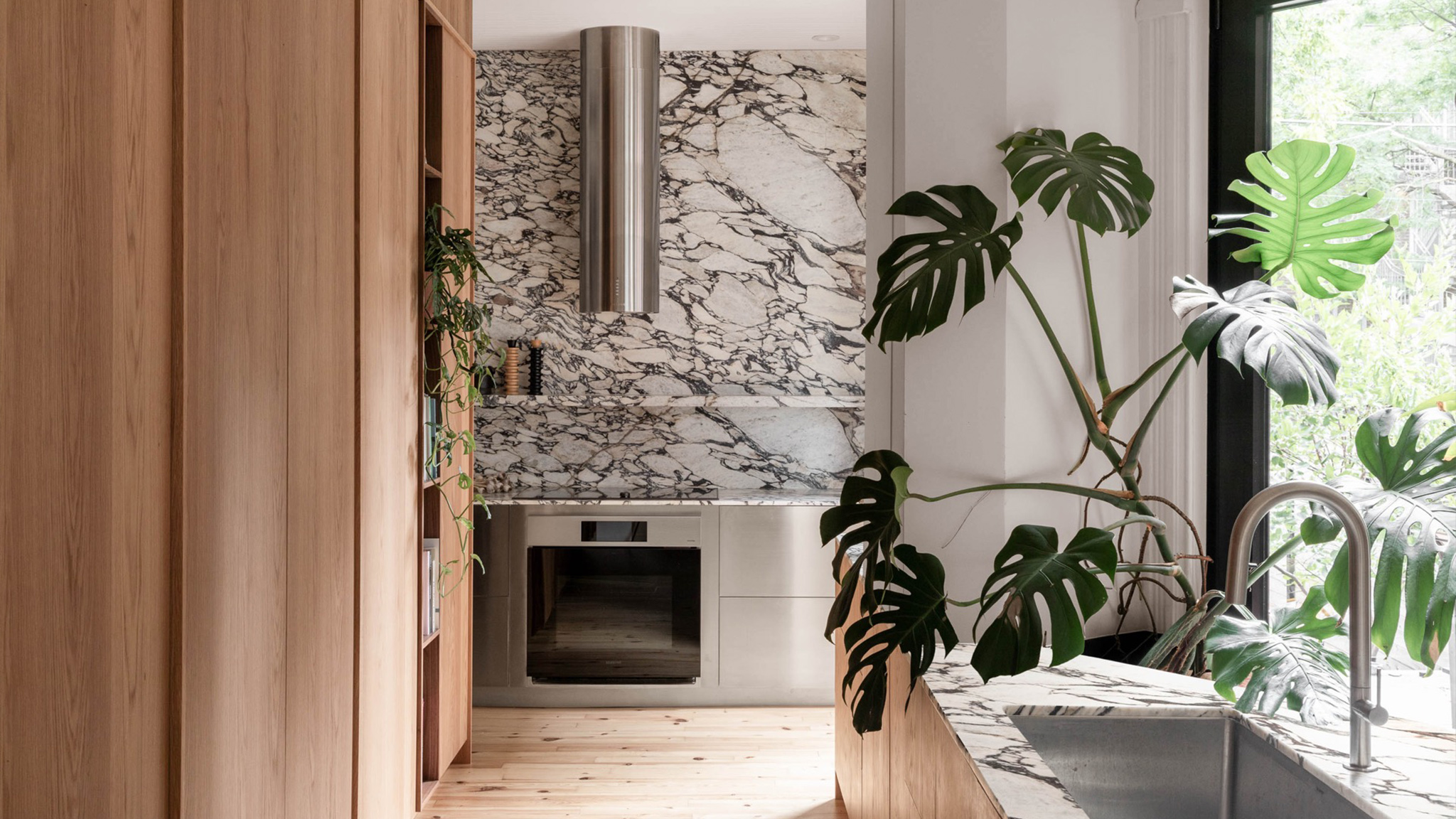
The Transformation of a Residence
Renovating historic residences often presents a conflict between the past and the present, with the primary challenge being the balance between historical texture and modern functionality. Taking a residence built around 1885 in the Pointe-Saint-Charles district of Montreal as an example, the design team MRDK preserved the original pine flooring and structural beams while introducing modern cabinetry with clean, sharp lines. This approach of 'objectification' allows new furniture to integrate into the space like independent sculptures, rather than forcibly covering the old appearance. In the kitchen, an oil painting characterized by a heavy, textured surface serves as a visual anchor, creating a textural echo with the surrounding newly painted walls. This method suggests that in interior design, one need not pursue total uniformity. Instead, by allowing the original structure and new elements to engage in an equal dialogue through material contrast and partial preservation, the space is endowed with a richer temporal layering.
Allowing Original Materials to Speak
In the renovation of old homes, preserving original materials is not merely a form of nostalgia; it is a way to maintain the authentic temporal imprint of the space. For instance, in an old residence in Montreal's Pointe-Saint-Charles district, the kitchen retains its original pine flooring. This warm wooden texture provides a soft backdrop for the modern cabinetry. When new slatted wooden cabinets are embedded into the space, the original beams are not removed but are allowed to extend directly to the edges of the new structure. This treatment ensures that old and new materials are physically interlocked, avoiding a harsh sense of disconnection. For homeowners currently undergoing renovations, this philosophy implies that historical details should not be sacrificed in the pursuit of minimalism. When selecting furniture, one should focus on pieces with simple lines and independent volumes that can be placed in old environments like sculptures. These items do not dominate the space but activate it through material contrast. Allowing old objects to continue speaking while new items accompany them quietly is a restrained design language that often possesses more vitality than a complete overhaul.
Continuity Between Indoor and Outdoor Spaces
The continuity between indoor and outdoor spaces is not just about the physical extension of areas but also concerns the seamless connection of visual and sensory experiences. In the renovation of old homes, this continuity is often achieved through the unification of materials and the flow of light and shadow. For example, when a residence preserves its original pine flooring and wooden beams, the outdoor landscape or courtyard is no longer a disconnected background but becomes a natural extension of the indoor warm tone. In their Montreal project, the design team MRDK maintained coherence in the temporal dimension by preserving historical details while introducing modern elements. For readers interested in interior design, understanding this continuity helps break down the boundaries between inside and outside. When selecting furniture or planning layouts, one can consider designs that guide the gaze outward or utilize materials that echo the outdoor environment, creating a visual dialogue between indoor and outdoor spaces. This approach not only enhances the spatial hierarchy but also allows residents to feel a more open and natural atmosphere in their daily lives, making the home a harmonious whole with its external environment.
The Juxtaposition of Furniture and Art
In the context of old home spaces, the juxtaposition of furniture and art often disrupts the linear narrative of time. Taking an old residence in Montreal's Pointe-Saint-Charles district as an example, the oil painting by Rosalie Gamache hanging in the kitchen features a heavy texture that resonates with the surrounding newly painted walls. This juxtaposition is not a simple decorative overlay but rather allows the artwork to serve as a visual anchor for the space. For readers interested in renovation, this approach suggests that when selecting furniture, one should pay attention to pieces with independent volumes and simple lines, such as lighting or seating from FLOS HOME. These items can be placed in old environments like sculptures. Through material contrast and partial preservation, the original structure and new elements can engage in an equal dialogue, endowing the space with a richer temporal layering. This restrained design language is more vital than a complete renovation and allows residents to feel the harmonious coexistence of history and modernity in their daily lives.
Details in Living Scenarios
In the renovation of old homes, details often determine the breathing quality of the space. Taking an old residence in Montreal's Pointe-Saint-Charles district as an example, the kitchen retains its original pine flooring, whose warm wooden texture provides a soft backdrop for the modern cabinetry. When new slatted wooden cabinets are embedded into the space, the original beams are not removed but extend directly to the edges of the new structure. This physical interlocking avoids a harsh sense of disconnection. For readers interested in renovation, this philosophy implies that historical details should not be sacrificed in the pursuit of minimalism. When selecting furniture, one should focus on pieces with simple lines and independent volumes that can be placed in old environments like sculptures. These items do not dominate the space but activate it through material contrast. Allowing old objects to continue speaking while new items accompany them quietly is a restrained design language that often possesses more vitality than a complete overhaul.
Reflecting on the Present from the Case Study
Looking back at the nearly 150-year-old residence in Montreal, the MRDK team did not attempt to erase the traces of time but instead allowed the original beams and new wooden slats to interlock physically. This treatment suggests that renovation need not pursue total uniformity. Preserving the warmth of the pine flooring and historical details allows the space to possess a genuine sense of breathing. For readers currently planning the renovation of old homes, this strategy of 'equal dialogue between old and new' is worth emulating. When introducing modern furniture, one can focus on pieces with independent volumes and simple lines, such as lighting or seating from FLOS HOME. These items can be placed in old environments like sculptures, activating the space through material contrast rather than forcibly covering the old appearance. Allowing old objects to continue speaking while new items accompany them quietly is a restrained design language that is more vital than a complete renovation and allows residents to feel the harmonious coexistence of history and modernity in their daily lives.
Good questions, clear answers.
What does Timeless Deco do?+
Timeless Deco connects European furniture resources with interior projects, offering selection, sourcing coordination, logistics and installation planning. The exact scope is agreed for each project.
Can you source several brands for one project?+
A project can start with a multi-brand furniture schedule that considers dimensions, finishes, budget and delivery. Share a floor plan and references for the brands or spaces you prefer.
How do I start a sourcing conversation?+
Submit your name, contact details, city and brief through the project enquiry page. You can also call the consultation number or send an email directly.
Take your inspiration a little further.
Start your project ↗