
Brand stories
MINOTTI Import Guide: Spatial Adaptation for Cold Climates
Analyzes MINOTTI furniture adaptation for cold climates, covering spatial judgment, configuration logic, and procurement workflows for professional buyers.
Assessing Spatial Suitability
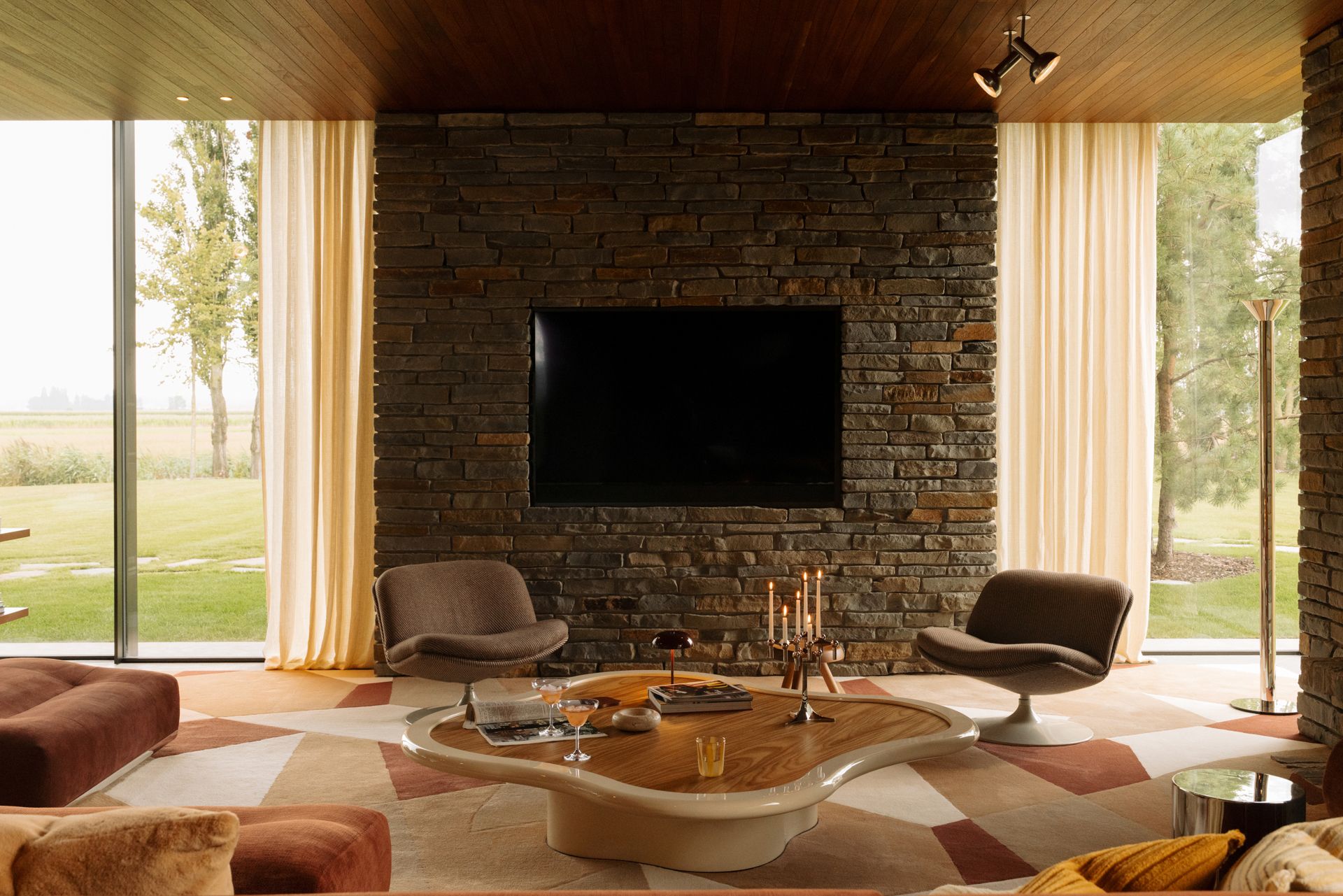
Before selecting furniture, it is essential to scrutinize the local climate and lighting conditions of the residence. Consider the approach of Belgian designer Bieke Casteleyn, who introduced California Mid-Century Modernism into her home situated on a low-lying plain. Addressing the local characteristics of cold temperatures and short daylight hours, she transformed the style into a 'winterized' interpretation. This spatial adaptation logic emphasizes the combination of single-story layouts with warm wood tones, utilizing ample natural light to enhance spatial transparency. Within a warm-toned interior palette, cold materials such as stainless steel are used as accents to echo the local climate features. For renovators, determining whether a space suits a particular style hinges on observing how the architecture interacts with the natural environment. This involves integrating greenery through grass-covered roofs or adjusting the ratio of warm and cool materials to balance regional climate differences, rather than simply replicating styles from distant locations.
Selecting Products by Room
In living rooms and open areas, furniture must serve to connect spaces and guide the line of sight. MINOTTI designs often reflect a consideration for spatial fluidity, making them suitable for modern residences that require a sense of openness. In Bieke Casteleyn’s home, the single-story layout paired with warm wood allows furniture to act as an extension of natural light rather than a barrier. When choosing such products, one should ensure the volume matches the room's scale to avoid a sense of oppression in low-ceilinged or compact spaces. For bedrooms or private corners, one can borrow the material pairing logic by introducing small amounts of cool metal elements into a warm-toned base to balance visual temperature. This selection approach does not rely on specific brands but emphasizes the functional positioning of furniture within the space: whether it serves as a visual focal point or a background element. Readers should first determine the primary activity type of the room, then select products based on light and circulation paths, ensuring the furniture meets aesthetic preferences while serving daily comfort and convenience.
Interpreting Configurations and Quotes
When evaluating imported furniture configurations, it is crucial to avoid misinterpreting a single case as a universal standard. In Bieke Casteleyn’s residence, the 'winterized California Modernism' scheme, featuring a combination of warm wood and stainless steel, was a customized choice for a specific climate, not a default configuration for brands like MINOTTI. When reading quotes, readers should distinguish between the basic framework and personalized customization, clearly understanding the impact of material substitutions on cost. For instance, upgrading standard wood to special textured wood or adding metal finishes will alter the final price structure. The key to understanding configuration logic lies in identifying which elements serve spatial function and which belong to aesthetic preference. Avoid blindly pursuing all details from a case study; instead, filter for core configuration items that truly enhance the living experience based on your own space scale and budget, ensuring every investment corresponds to clear spatial value.
Imported Furniture Purchase Process
The core of purchasing imported furniture lies in confirming delivery conditions and spatial adaptability, rather than simply comparing prices. Taking MINOTTI as an example, its products require an assessment of logistics paths and installation environments before entering a home. Referring to Bieke Casteleyn’s practice in her Belgian low-plain residence, she 'winterized' California Mid-Century Modernism by using single-story layouts and warm wood materials to adapt to the local climate. This suggests that during procurement, attention should be paid to the furniture material's tolerance to local temperature and humidity changes, and whether the dimensions fit the existing architectural scale. In the import process, it is necessary to clarify the boundaries of responsibility for customs clearance, transportation, and after-sales service, avoiding the direct application of configurations from distant cases. For example, the addition of cool materials like stainless steel is to balance warm tones, not a universal standard. Readers should filter for core configurations that truly enhance the living experience based on their own space's light, circulation, and climate characteristics, ensuring imported furniture naturally integrates with the environment upon arrival.
Borrowing Brand Styles
The core of borrowing brand styles lies in extracting their design logic rather than copying individual items. MINOTTI works often reflect respect for spatial fluidity, making them suitable for modern residences seeking transparency. Referring to Bieke Casteleyn’s practice in her Belgian residence, she 'winterized' California Mid-Century Modernism by using single-story layouts and warm wood materials to adapt to the local climate. This approach suggests that style borrowing should serve spatial adaptation: introducing a small amount of cool metal into a warm-toned base to balance visual temperature, and utilizing ample natural light to enhance spatial layers rather than relying on complex decorations. When borrowing, readers should focus on how the brand handles the relationship between light, materials, and circulation, transforming it into a design language suitable for their own climate and scale, ensuring the style integrates into daily living experiences rather than becoming a突兀 visual symbol.
Pre-Order Checklist
Before confirming an order for imported furniture, design intentions must be translated into executable implementation parameters. Taking MINOTTI as an example, its products require verification of the match between dimensions and architectural scale before entering a home. Referring to Bieke Casteleyn’s practice in her Belgian residence, she 'winterized' California Mid-Century Modernism by using single-story layouts and warm wood materials to adapt to the local climate. This suggests that during procurement, attention should be paid to the furniture material's tolerance to local temperature and humidity changes, and whether the dimensions fit the existing architectural scale. In the import process, it is necessary to clarify the boundaries of responsibility for customs clearance, transportation, and after-sales service, avoiding the direct application of configurations from distant cases. For example, the addition of cool materials like stainless steel is to balance warm tones, not a universal standard. Readers should filter for core configurations that truly enhance the living experience based on their own space's light, circulation, and climate characteristics, ensuring imported furniture naturally integrates with the environment upon arrival, rather than becoming an突兀 decorative object.
Good questions, clear answers.
What does Timeless Deco do?+
Timeless Deco connects European furniture resources with interior projects, offering selection, sourcing coordination, logistics and installation planning. The exact scope is agreed for each project.
Can you source several brands for one project?+
A project can start with a multi-brand furniture schedule that considers dimensions, finishes, budget and delivery. Share a floor plan and references for the brands or spaces you prefer.
How do I start a sourcing conversation?+
Submit your name, contact details, city and brief through the project enquiry page. You can also call the consultation number or send an email directly.
Take your inspiration a little further.
Start your project ↗